You can spend hours memorising vocabulary, completing grammar exercises, and taking IELTS practice tests—and still feel lost when a native speaker talks quickly, a Reading passage uses unfamiliar language, or a Speaking question takes you by surprise.
The problem may not be that you need more English.
You may simply need more real English.
Effective IELTS preparation should not be limited to exam books. Authentic materials such as news articles, podcasts, films, conversations, advertisements, reviews, and everyday documents can expose you to the vocabulary, sentence patterns, accents, ideas, and communication styles that you need to understand and use English confidently.
The key is to use these materials strategically.
For both IELTS Academic and IELTS General Training candidates, the goal is not to replace official practice tests. Instead, real-life English can become the bridge between classroom English and the practical language skills you need on test day.
Here are six powerful ways to use authentic materials to make your IELTS preparation more effective, engaging, and realistic.
Table of Contents
Why Real-Life Materials Matter for IELTS Preparation
Real-life materials are resources created for genuine communication rather than specifically for language learners. They include newspaper articles, podcasts, interviews, documentaries, films, product reviews, websites, menus, advertisements, workplace documents, and everyday conversations.
They can help you develop several skills at the same time.
Key benefits of using authentic English
- Better vocabulary: You learn words and phrases in meaningful contexts rather than isolated lists.
- Stronger comprehension: You become more comfortable with different sentence structures and speaking speeds.
- Greater flexibility: You learn to understand unfamiliar language without translating every word.
- Improved fluency: You encounter natural expressions and communication patterns.
- Higher confidence: Regular exposure makes English feel less unfamiliar.
- Broader topic knowledge: You build ideas that can help when discussing familiar and unfamiliar topics.
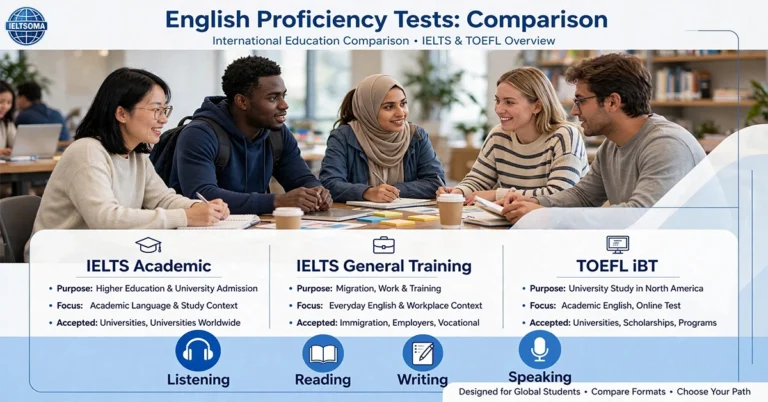
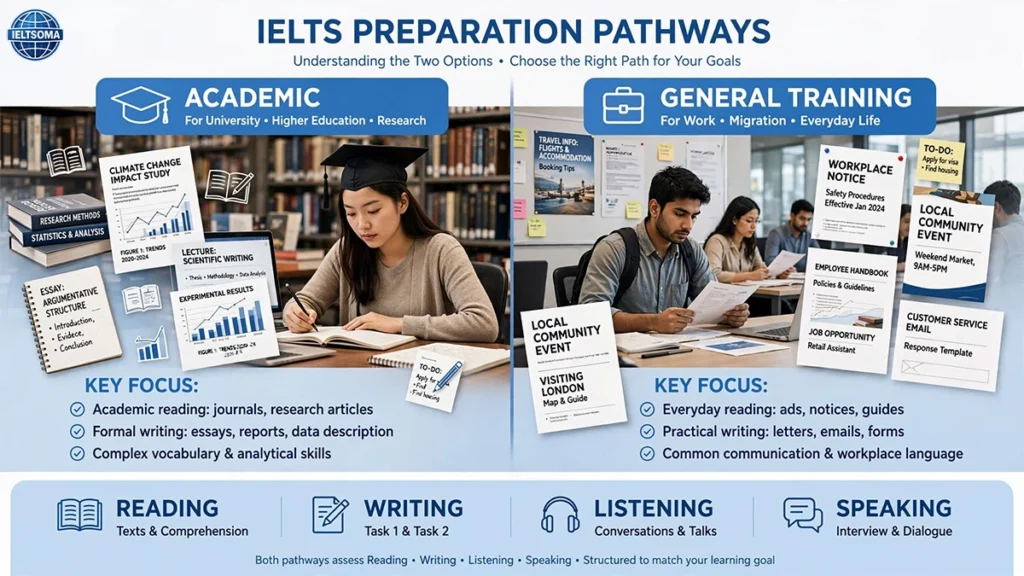
The official IELTS format also makes this balanced approach useful. IELTS has four sections—Listening, Reading, Writing, and Speaking. Listening and Speaking are the same for Academic and General Training, while Reading and Writing differ.
That means your preparation should combine general English development with test-specific practice.
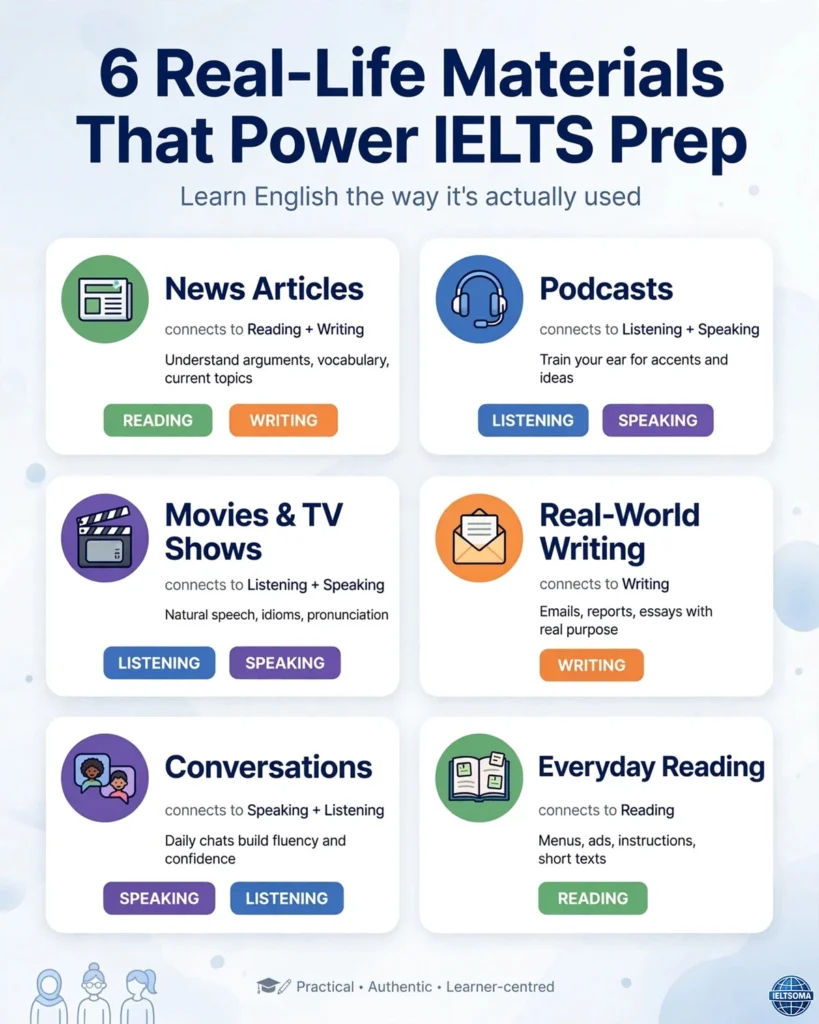
1. Use News Articles for IELTS Reading Preparation
News articles are excellent resources for building the reading skills needed in IELTS preparation.
They introduce you to a wide range of subjects, including science, technology, education, health, business, culture, climate, travel, and society. This variety can help you become more comfortable reading about unfamiliar topics.
Academic IELTS candidates can use longer analytical or explanatory articles to practise understanding complex ideas. General Training candidates can also benefit from news, especially when preparing for the longer and more demanding parts of the Reading test.
How to use news articles effectively
Do not simply read an article from beginning to end.
Instead, turn each article into a mini IELTS Reading exercise.
Try this process:
- Read the headline and predict the main topic.
- Skim the article to identify the main idea.
- Read the first sentence of each paragraph.
- Look for names, dates, numbers, places, and key terms.
- Identify the writer’s main argument or purpose.
- Write a one- or two-sentence summary.
- Choose five unfamiliar words and learn them in context.
You can also practise skimming and scanning, two important reading behaviours for managing information efficiently.
Try this IELTS preparation activity
Choose a 700–1,000-word article.
Give yourself 10 minutes.
After reading, answer these questions:
- What is the article mainly about?
- What are the three most important points?
- What evidence supports the main argument?
- Which paragraph contains a specific piece of information?
- Can you explain the article without looking back?
This exercise trains you to search for meaning instead of translating every sentence.
2. Listen to Podcasts for IELTS Listening Preparation
Podcasts can make your IELTS preparation more flexible because you can listen while walking, commuting, exercising, or taking a break from your desk.
They are particularly useful because authentic podcasts expose you to different speakers, topics, speaking speeds, and styles.
The IELTS Listening test uses different accents, and candidates hear the recordings once only. Official IELTS information also notes that British, Australian, New Zealand, and North American accents may be used.
That makes varied listening practice valuable.
How to use podcasts for IELTS
Start with content you can understand reasonably well.
Do not choose the fastest or most difficult podcast simply because it seems challenging.
Try this three-stage method.
Stage 1: Listen for the main idea
Do not pause. Focus on understanding the overall message.
Stage 2: Listen for details
Listen again and write down names, numbers, reasons, examples, opinions, or changes in information.
Stage 3: Review the language
Check unfamiliar words and phrases. Then listen again and notice how the speaker pronounces them.
You can also write a short summary after listening.
For example:
“The speaker discusses how technology has changed the way people work and explains two advantages and one potential disadvantage.”
This simple activity combines listening, vocabulary, writing, and comprehension.
For additional authentic audio, TED Talks Daily publishes regular talks covering a broad range of subjects, giving learners exposure to different topics and natural spoken English. TED Talks Daily
Pro tip
If a podcast is too fast, slowing it down temporarily can help you understand difficult sections. However, gradually return to normal speed so that your ears become comfortable with natural speech.
3. Watch Movies and TV Shows for Speaking and Listening
Movies and TV shows can be powerful tools in IELTS preparation, particularly for Listening, pronunciation, vocabulary, and Speaking.
However, passive watching is not enough.
If you simply watch an entire movie for entertainment, you may improve your general exposure to English without deliberately developing IELTS-related skills.
Instead, turn short scenes into practice exercises.
How to use movies strategically
Choose a two- to five-minute scene.
Watch it once with English subtitles.
Then watch it again without subtitles.
Write down useful expressions.
Finally, replay the scene and imitate selected lines.
Pay attention to:
- pronunciation
- word stress
- connected speech
- intonation
- pauses
- informal expressions
- polite language
- emotional tone
You do not need to copy a particular accent.
For IELTS Speaking, clear and understandable pronunciation matters more than trying to sound like a native speaker. The official Speaking assessment considers fluency and coherence, lexical resource, grammatical range and accuracy, and pronunciation.
Try shadowing
Shadowing means listening to a speaker and repeating their words shortly afterward.
For example:
Speaker: “I never really thought about it that way.”
You: “I never really thought about it that way.”
Repeat the sentence several times.
This can help you become more comfortable producing connected speech and natural sentence rhythms.
4. Turn Real-World Content Into IELTS Writing Practice
Real-world writing can make your IELTS preparation more practical because it allows you to observe how writers organise information, introduce arguments, explain evidence, and reach conclusions.
Read opinion pieces, explanatory articles, reviews, blogs, or essays from reputable publications.
Do not copy their sentences.
Instead, study their structure.
Look for these features
- How does the writer introduce the topic?
- How are ideas grouped?
- How does each paragraph develop one main point?
- What examples support the argument?
- Which linking expressions are used?
- How does the writer introduce an alternative viewpoint?
- How does the conclusion bring the discussion together?
Then create your own response.
For example, if you read an article about remote work, you could write an IELTS-style essay discussing whether working from home has more advantages or disadvantages.
The objective is not to reproduce the original article.
The objective is to learn how ideas can be developed clearly.
Build a personal idea bank
As you read, create notes under common IELTS themes:
- education
- technology
- environment
- health
- employment
- transport
- society
- media
- tourism
- government
For each topic, record:
Idea → Explanation → Example → Result
This gives you a structured way to develop ideas during IELTS Writing and Speaking.
Remember that authentic writing should complement, not replace, official IELTS writing practice. Official IELTS preparation resources include sample questions and materials designed to familiarise candidates with test tasks and timed conditions.
5. Have Real Conversations for IELTS Speaking Preparation
If you want to improve IELTS Speaking, you need to speak.
Reading about speaking strategies is useful, but it cannot replace actual speaking practice.
Real conversations help you practise responding quickly, explaining ideas, asking questions, expressing opinions, and continuing a discussion when you do not have a prepared answer.
Build speaking practice into everyday life
You could:
- speak with an English-speaking friend
- join an online language exchange
- practise with a study partner
- discuss a news story
- describe your daily routine
- explain a problem and suggest solutions
- record yourself answering IELTS questions
The official IELTS Speaking test has three parts. Part 1 focuses on familiar topics, Part 2 requires a longer individual response, and Part 3 develops a more detailed discussion around the Part 2 topic.
You can therefore practise each part differently.
For Part 1
Give natural answers rather than memorised speeches.
Instead of:
“Yes, I like reading because reading is very important for everyone.”
Try:
“Yes, definitely. I usually read in the evening, especially when I want to relax after work.”
For Part 2
Choose an everyday topic and speak for up to two minutes.
Use a simple structure:
What → When/Where → Details → Why → Result or feeling
For Part 3
Move beyond personal experience.
Explain:
- why something happens
- whether you agree
- how things have changed
- what the advantages and disadvantages are
- what might happen in the future
This helps you practise developing and supporting ideas rather than giving one-sentence answers.
6. Explore Everyday Reading Materials
Everyday documents are especially useful for IELTS preparation because they expose you to practical language used outside classrooms.
Consider using:
- menus
- advertisements
- travel information
- brochures
- timetables
- workplace notices
- product descriptions
- public information
- online reviews
- instructions
This is particularly relevant to IELTS General Training candidates.
The General Training Reading test includes texts connected with everyday life, workplace situations, and topics of general interest. Official IELTS information describes texts such as notices, advertisements, timetables, job descriptions, contracts, training materials, newspapers, magazines, books, and online resources.
Turn everyday material into practice
Imagine you find a hotel advertisement.
Ask yourself:
- What services are included?
- What are the prices?
- What dates are available?
- What conditions apply?
- What information is missing?
- Which words indicate restrictions?
Then create your own questions.
This develops the ability to locate specific information quickly.
How to Adapt These Strategies for Academic IELTS
IELTS Academic candidates should give extra attention to academic vocabulary, complex explanations, formal language, and unfamiliar subject matter.
For example, your real-life materials could include:
- science articles
- educational podcasts
- university lectures
- documentaries
- analytical articles
- technology discussions
- research-related news
For Reading, practise identifying the relationship between ideas.
For Listening, focus on lectures, explanations, and discussions.
For Writing, study how formal arguments are developed.
For Speaking, practise explaining opinions and discussing broader issues.
The IELTS Academic Reading test uses texts from sources such as books, journals, magazines, newspapers, and online resources, written for a non-specialist audience.
The important point is to combine authentic exposure with actual Academic IELTS question practice.
How to Adapt These Strategies for General Training IELTS
General Training candidates should place greater emphasis on practical, social, and workplace English while still developing broader reading and listening abilities.
Useful materials include:
- advertisements
- workplace documents
- job descriptions
- travel information
- public notices
- customer reviews
- emails
- everyday conversations
- news and magazine articles
Your IELTS preparation should reflect the type of communication you are likely to encounter in everyday life.
At the same time, do not assume General Training is simply “easy English.” The Reading test becomes progressively more demanding, and Task 2 in Writing requires candidates to discuss a point of view, argument, or problem.
How to Combine Real-Life Materials With IELTS Practice Tests
One of the biggest mistakes candidates make is choosing between authentic English and IELTS practice.
You do not have to choose.
Use both.
Think of your preparation as having two layers.
Layer 1: English development
Use:
- podcasts
- films
- news
- conversations
- everyday documents
- interviews
These improve your general ability to understand and use English.
Layer 2: Exam training
Use:
- official sample questions
- timed Reading tests
- Listening practice
- Writing tasks
- Speaking simulations
- answer analysis
These help you understand the test format and practise performing under test conditions.
Official IELTS sample materials allow candidates to become familiar with the test format, experience different task types, practise under timed conditions, and review answers.
This combination is much more useful than endlessly taking mock tests without addressing the underlying language weaknesses.
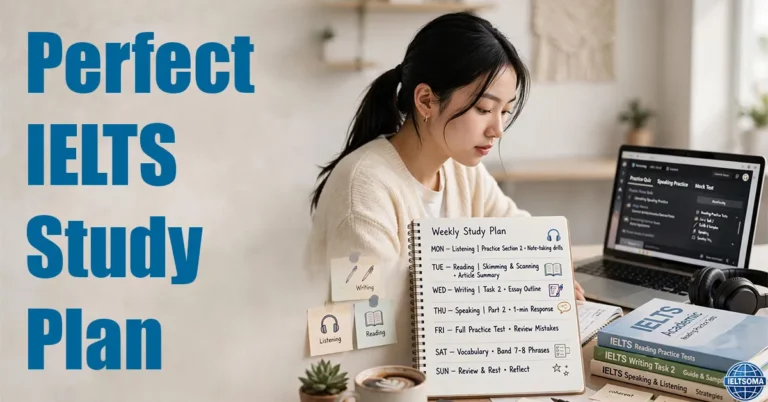
A Simple 7-Day IELTS Preparation Routine
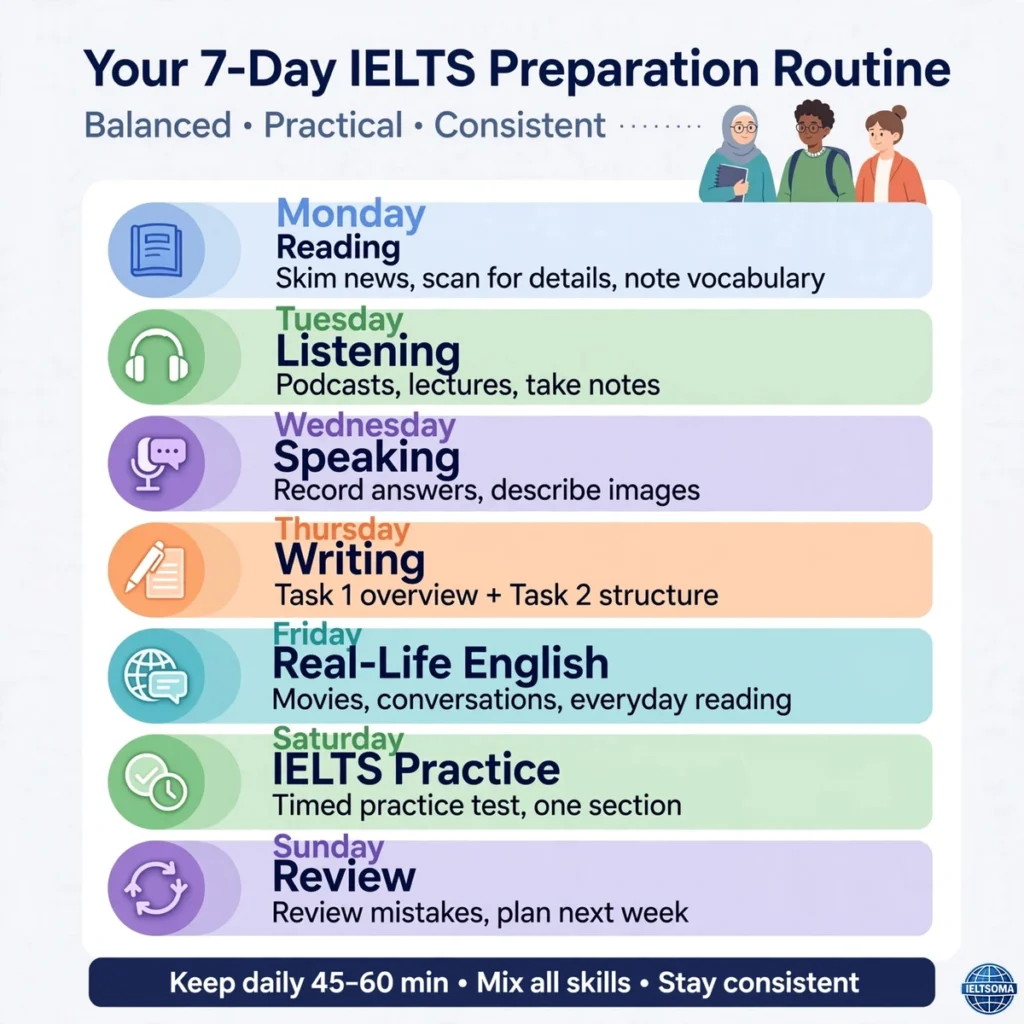
You can adapt the following routine to your level and available study time.
Monday: Reading
Read one substantial article.
Write a summary and learn five useful words.
Tuesday: Listening
Listen to a podcast or talk.
Write down the main idea and five details.
Wednesday: Speaking
Record yourself answering three IELTS Speaking questions.
Listen to your recording and identify pauses, grammar errors, and unclear pronunciation.
Thursday: Writing
Read an opinion article.
Identify its main argument and supporting ideas.
Then write your own response to a related IELTS-style question.
Friday: Real-Life English
Watch a short English-language scene.
Practise shadowing five to ten sentences.
Saturday: IELTS Practice
Complete a timed IELTS Reading, Listening, Writing, or Speaking practice session.
Sunday: Review
Review your mistakes.
Do not simply count your score.
Ask:
Why did I get this question wrong?
Was it vocabulary?
Misreading?
Poor time management?
A spelling mistake?
Failure to understand the speaker?
Weak idea development?
Your mistakes tell you what to practise next.
Common IELTS Preparation Mistakes to Avoid
Relying only on vocabulary lists
Knowing a word does not automatically mean you can use it accurately.
Learn vocabulary in context and practise using it.
Watching English without active practice
Entertainment can expose you to English, but active tasks produce more targeted learning.
Pause, repeat, summarise, and analyse.
Taking mock tests every day
Practice tests are valuable, but doing them repeatedly without reviewing mistakes can limit improvement.
Spend time analysing why answers were wrong.
Memorising Speaking answers
Memorised answers can sound unnatural and may not fit the examiner’s questions.
Develop ideas and language patterns instead.
Ignoring your weaker skill
If Reading is strong but Writing is weak, spending most of your study time on Reading may feel comfortable but will not address the main problem.
Using difficult materials just to appear advanced
The best resource is one that challenges you without becoming completely incomprehensible.
Gradually increase difficulty.
Frequently Asked Questions About IELTS Preparation
What is the best way to start IELTS preparation?
Start by understanding your test type, assessing your current level, identifying your target score, and learning the test format. Then combine official IELTS practice with regular exposure to authentic English.
Can real-life materials improve IELTS scores?
Real-life materials can help develop vocabulary, comprehension, fluency, pronunciation, and familiarity with natural English. However, they should complement targeted IELTS practice rather than replace it.
What should I read for IELTS preparation?
Read a mixture of news articles, opinion pieces, informative articles, reviews, workplace documents, advertisements, and other authentic English texts. Academic candidates should include more analytical and academic-style material, while General Training candidates should also practice every day and workplace texts.
How can I improve IELTS Listening?
Listen regularly to authentic English and practice understanding different speakers, topics, and accents. After listening, summarize what you heard and review unfamiliar vocabulary. Also complete official IELTS Listening practice to become familiar with question types and test conditions.
Can watching movies help with IELTS Speaking?
Yes. Movies and TV shows can expose you to pronunciation, natural expressions, intonation, and conversational patterns. For more targeted practice, use short scenes for shadowing and repeat useful phrases aloud.
How can I practice IELTS Speaking alone?
Record yourself answering IELTS-style questions. For Part 2, prepare for one minute and then speak for up to two minutes. Listen to your recording and evaluate fluency, vocabulary, grammar, pronunciation, and idea development.
Should I use real-life materials instead of IELTS books?
No. Use them together. Authentic materials help develop broader English skills, while IELTS-specific resources help you understand the exam format, question types, timing, and assessment requirements.
Are Academic and General Training IELTS preparation strategies the same?
They overlap, but they are not identical. Listening and Speaking are the same, while Reading and Writing differ. Academic candidates should emphasize academic-style language and topics, whereas General Training candidates should include more every day and workplace materials.
How many hours a day should I study for IELTS?
There is no single number that works for everyone. Your ideal study time depends on your current English level, target band score, test date, and weaknesses. Consistent, focused practice is more useful than studying for long periods without a clear plan.
How can I make IELTS preparation less boring?
Create variety. Combine official practice tests with podcasts, news, films, conversations, writing exercises, and real-world reading. Choose topics you genuinely enjoy, then connect them to specific IELTS skills.
Conclusion
Successful IELTS preparation is not about spending every waking hour with an IELTS textbook.
It is about building the ability to understand and communicate in English—and then learning how to demonstrate those abilities effectively in the IELTS test.
News articles can strengthen Reading.
Podcasts can develop Listening.
Movies and TV shows can improve pronunciation and conversational awareness.
Real-world articles can provide ideas for Writing.
Conversations can build Speaking confidence.
Everyday documents can develop practical reading skills, especially for General Training candidates.
But the strongest approach is balanced.
Use authentic English to develop your underlying language ability, and use official IELTS practice to develop your exam technique.
Start with one resource today.
Read one article. Listen to one podcast. Record one Speaking answer. Write one response.
Small, consistent actions can turn IELTS preparation from a stressful routine into a structured path toward your target score.
Further Reading: