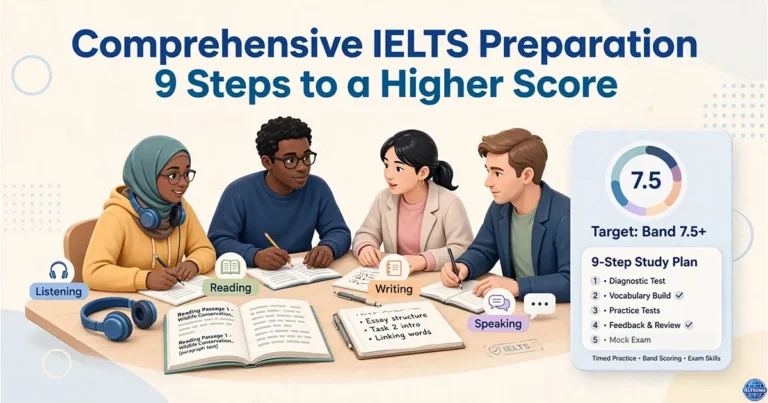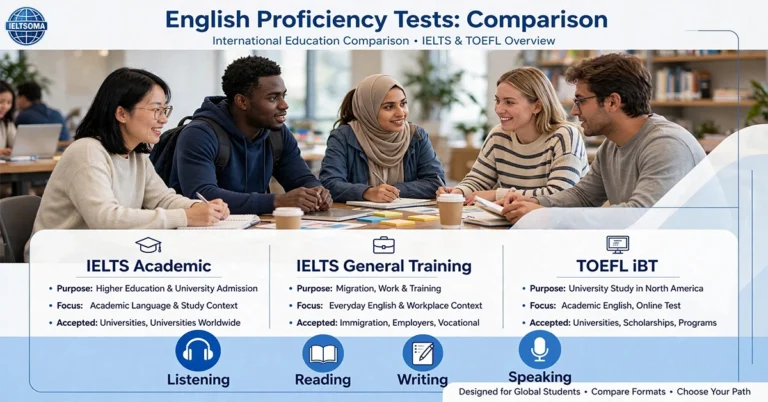
Preparing for the IELTS exam can feel overwhelming, especially if you’re aiming for a high band score for university admission, immigration, or professional registration. One of the smartest ways to improve your performance is by taking regular practice tests. The Benefits of IELTS Practice Test go far beyond simply answering sample questions—they help you understand the exam format, manage your time, identify your strengths and weaknesses, and build the confidence needed to perform under real exam conditions.
Many candidates spend months studying English but overlook the importance of realistic exam practice. Without practice tests, it’s difficult to know whether your preparation is actually effective. Regular testing provides measurable progress and helps you make informed adjustments to your study plan.
In this comprehensive guide, you’ll discover the most important Benefits of IELTS Practice Test, how practice tests improve every section of the exam, and how to use them effectively to maximize your IELTS band score.
Table of Contents
Why Practice Tests Matter in IELTS Preparation
Studying vocabulary and grammar is essential, but knowledge alone isn’t enough. IELTS is a structured examination that evaluates how well you use English within specific time limits.
Practice tests bridge the gap between learning English and successfully applying your knowledge during the actual exam.
They simulate the real testing environment, allowing you to become comfortable with the question types, instructions, and timing before exam day.
Instead of walking into the examination hall with uncertainty, you’ll know exactly what to expect.
15 Benefits of IELTS Practice Test
1. Understand the IELTS Exam Format
One of the biggest Benefits of IELTS Practice Test is becoming familiar with the structure of the examination.
IELTS consists of four sections:
- Listening
- Reading
- Writing
- Speaking
Each section follows a different format with unique question types.
Through repeated practice, you’ll learn:
- Number of questions
- Time allocated
- Marking style
- Instructions
- Common question patterns
When the format becomes familiar, your brain can focus entirely on answering questions instead of figuring out what to do next.
2. Improve Time Management Skills

Time management is one of the biggest challenges in IELTS.
Many candidates know the correct answers but fail to complete every question because they run out of time.
Practice tests teach you how long you should spend on each task.
For example:
Listening
- Follow audio without missing answers.
- Transfer answers accurately.
Reading
- Allocate time wisely across all passages.
- Avoid spending too long on difficult questions.
Writing
- Task 1: about 20 minutes
- Task 2: about 40 minutes
After several practice sessions, you’ll naturally develop a pace that suits the official exam.
3. Identify Your Strengths and Weaknesses
Every IELTS candidate has different strengths.
Some excel in Reading but struggle with Speaking.
Others perform well in Listening but lose marks in Writing.
Taking practice tests allows you to identify these differences early.
Instead of studying everything equally, you can focus more on weaker areas.
For example:
- Weak grammar
- Poor vocabulary
- Slow reading speed
- Pronunciation issues
- Weak coherence in writing
This targeted preparation is far more effective than random studying.
4. Build Confidence Before Test Day
Confidence plays a major role in exam performance.
Students who have completed multiple full-length practice tests usually feel much calmer during the real IELTS exam.
The more familiar you become with the exam, the lower your anxiety becomes.
Confidence helps you:
- Think clearly
- Avoid panic
- Read instructions carefully
- Maintain concentration
- Make better decisions
Among all the Benefits of IELTS Practice Test, increased confidence is often the most noticeable.
5. Improve Listening Accuracy
The Listening section requires complete attention.
You only hear the recording once.
Practice tests train your ears to recognize:
- Different English accents
- Numbers
- Dates
- Addresses
- Spellings
- Paraphrased information
You’ll also learn how IELTS hides answers through paraphrasing rather than using identical wording.
This skill develops naturally with consistent practice.
6. Develop Faster Reading Skills
Many candidates struggle to finish the Reading section within 60 minutes.
Practice tests help improve:
- Skimming
- Scanning
- Keyword recognition
- Understanding main ideas
- Locating supporting details
As your reading speed improves, you’ll have more time to review difficult questions.
This significantly reduces careless mistakes.
7. Strengthen Writing Performance
Writing is one of the most difficult IELTS sections.
Practice tests teach you how to:
- Organize ideas logically
- Write introductions quickly
- Develop body paragraphs
- Use cohesive devices naturally
- Maintain task response
Regular practice also improves grammar accuracy and vocabulary usage.
The more essays you complete under timed conditions, the more natural the writing process becomes.
8. Improve Speaking Fluency
Many candidates know English well but hesitate during speaking.
Practice interviews reduce hesitation.
You’ll become comfortable answering common questions about:
- Family
- Education
- Work
- Hobbies
- Technology
- Environment
- Travel
Repeated speaking practice improves:
- Fluency
- Pronunciation
- Vocabulary
- Confidence
- Natural communication
Eventually, you’ll respond without overthinking every sentence.
9. Learn From Your Mistakes
Mistakes become valuable learning opportunities when you analyze them.
After every practice test, review:
- Incorrect answers
- Grammar mistakes
- Vocabulary gaps
- Time management problems
- Misunderstood questions
Keep a notebook of recurring mistakes.
Avoid repeating them in future practice sessions.
This simple habit can dramatically improve your IELTS performance over time.
10. Track Your Progress
One of the greatest Benefits of IELTS Practice Test is measurable improvement.
Instead of guessing whether you’re improving, you’ll have real data.
Track:
- Listening scores
- Reading scores
- Writing feedback
- Speaking feedback
- Overall estimated band score
Watching your scores increase keeps motivation high throughout your preparation journey.
11. Become Familiar With Common Question Types
IELTS uses a variety of question formats.
Practice tests expose you to:
- Multiple choice
- Matching headings
- Sentence completion
- Summary completion
- True, False, Not Given
- Yes, No, Not Given
- Diagram labeling
- Map labeling
- Table completion
- Short-answer questions
When you’ve seen these question types many times, they become much easier to answer under exam pressure.
12. Reduce Exam-Day Stress
Many students experience anxiety simply because they don’t know what to expect.
Practice removes uncertainty.
By the time you take the official IELTS exam, it should feel like another practice session rather than an unfamiliar challenge.
Lower stress often leads to better concentration and fewer careless mistakes.
13. Improve Decision-Making Under Pressure
IELTS requires quick thinking.
Sometimes you’ll need to decide whether to:
- Skip a difficult question
- Return later
- Guess intelligently
- Move on to protect your remaining time
Practice tests teach these valuable decision-making skills naturally.
Candidates who practice regularly usually make smarter choices during the actual exam.
14. Increase Overall Band Score Potential
Although practice tests don’t automatically increase your score, they improve the skills that contribute to higher performance.
Consistent practice helps you:
- Answer more accurately
- Finish on time
- Reduce mistakes
- Improve confidence
- Apply effective strategies
These improvements work together to increase your chances of achieving your target band score.
15. Create an Effective Study Routine
Practice tests provide structure.
Instead of studying randomly, you can create a weekly preparation schedule.
For example:
Monday
Listening practice
Tuesday
Reading practice
Wednesday
Writing Task 1 and Task 2
Thursday
Speaking practice
Friday
Vocabulary revision
Saturday
Full-length IELTS practice test
Sunday
Review mistakes and improve weak areas
Following a structured routine helps maintain consistency, which is one of the biggest factors behind successful IELTS preparation.
How Often Should You Take an IELTS Practice Test?
The ideal frequency depends on how much time you have before your exam.
If your exam is more than two months away
Take one full practice test every two weeks while focusing on improving individual skills during the rest of your study sessions.
If your exam is one month away
Complete one full-length practice test every week and spend additional time reviewing your mistakes.
If your exam is less than two weeks away
Take two to three full-length IELTS practice tests under realistic exam conditions. Complete each test without interruptions, follow the official time limits, and review every mistake afterward. At this stage, your focus should be on refining your strategy rather than learning entirely new concepts.
How to Get the Maximum Benefits of IELTS Practice Test
Simply completing practice tests is not enough. To truly benefit, you need to use them strategically.
Practice Under Real Exam Conditions
Treat every practice test as if it were the real IELTS exam.
- Find a quiet place.
- Set a timer.
- Avoid distractions.
- Complete every section in one sitting.
- Do not pause the test.
This approach helps you develop the stamina and focus needed for exam day.
Review Every Incorrect Answer
The real improvement happens after the test.
Instead of checking only your score, ask yourself:
- Why did I get this question wrong?
- Did I misunderstand the question?
- Was my vocabulary insufficient?
- Did I run out of time?
- Did I guess too quickly?
Keeping an error log will help you identify recurring mistakes and avoid repeating them.
Focus on Weak Areas
One of the greatest Benefits of IELTS Practice Test is identifying the skills that need improvement.
For example:
- If Listening is your weakest section, spend more time practicing different English accents.
- If Reading is challenging, improve your skimming and scanning techniques.
- If Writing is your weakest skill, write more essays and seek feedback.
- If Speaking is difficult, practice answering questions aloud every day.
Targeted preparation is far more effective than studying every section equally.
Build Your Vocabulary Naturally
Practice tests expose you to the vocabulary commonly used in IELTS.
Create a notebook where you record:
- New words
- Useful phrases
- Academic vocabulary
- Collocations
- Synonyms
Review these words regularly and use them in your writing and speaking practice.
Track Your Improvement
Record the results of every practice test.
A simple table can include:
| Date | Listening | Reading | Writing | Speaking | Estimated Band |
|---|---|---|---|---|---|
| Week 1 | 6.5 | 6.0 | 5.5 | 6.0 | 6.0 |
| Week 3 | 7.0 | 6.5 | 6.5 | 6.5 | 6.5 |
| Week 6 | 8.0 | 7.5 | 7.0 | 7.5 | 7.5 |
Tracking progress keeps you motivated and helps you determine whether your preparation strategy is working.
Common Mistakes to Avoid During IELTS Practice Tests
Many candidates unknowingly reduce the effectiveness of their preparation.
Avoid these common mistakes.
Practicing Without Timing Yourself
Completing a practice test without following the official time limits does not accurately reflect the real exam.
Always use a timer.
Ignoring Incorrect Answers
Looking only at your score is a missed opportunity.
Your mistakes provide valuable insights into what you need to improve.
Memorizing Answers
The purpose of a practice test is to improve your English skills, not to remember answer keys.
Instead, understand why each answer is correct.
Taking Too Many Tests Without Reviewing
Completing ten practice tests without reviewing mistakes is less effective than completing five tests and analyzing each one carefully.
Quality is more important than quantity.
Skipping Speaking Practice
Many students focus heavily on Reading and Listening while neglecting Speaking.
Practice speaking regularly, preferably with a teacher, language partner, or by recording yourself.
Online vs Paper-Based IELTS Practice Tests
Both formats have their advantages. However please note since mid of 2026, IELTS is now computer based only, a few test centers may still offer Paper-Based IELTS, so if you are planning to take paper based IELTS, do check with your local test center first before applying.
Online Practice Tests
Benefits include:
- Similar to computer-delivered IELTS
- Instant score estimates for Listening and Reading
- Convenient access
- Interactive features
Best for candidates taking the computer-based IELTS exam.
Paper-Based Practice Tests
Benefits include:
- Improve handwriting speed
- Easier for note-taking
- Closely matches the paper IELTS experience
Best for candidates taking the paper-based IELTS exam.
Whichever format you choose, the Benefits of IELTS Practice Test remain the same when completed under realistic conditions.
Expert Tips to Improve Your IELTS Score Faster
Follow these proven strategies to maximize your preparation.
Read English Every Day
Read:
- Newspapers
- Academic articles
- Magazines
- Blogs
- Books
This improves vocabulary, grammar, and reading speed.
Listen to Different English Accents
IELTS includes multiple English accents.
Practice listening to:
- British English
- Australian English
- Canadian English
- American English
- New Zealand English
Podcasts, documentaries, and news programs are excellent resources.
Practice Writing Every Week
Write both Task 1 and Task 2 essays regularly.
Focus on:
- Task achievement
- Coherence
- Grammar
- Vocabulary
- Paragraph organization
Seek feedback whenever possible.
Speak English Daily
Even fifteen to twenty minutes of speaking practice each day can improve fluency and confidence.
Talk about familiar topics such as:
- Education
- Technology
- Travel
- Environment
- Hobbies
- Work
- Culture
Stay Consistent
Consistency beats last-minute cramming.
Studying for one hour every day is generally more effective than studying for eight hours on the weekend.

Frequently Asked Questions
What are the main benefits of IELTS practice test sessions?
The main Benefits of IELTS Practice Test sessions include improving time management, understanding the exam format, identifying strengths and weaknesses, increasing confidence, reducing exam stress, and improving overall performance across all four IELTS sections.
How many IELTS practice tests should I take before the exam?
Most candidates benefit from completing between six and ten full-length practice tests before the official exam, along with regular practice for individual sections.
Do IELTS practice tests improve band scores?
Practice tests do not directly increase your band score. However, they help improve the skills, strategies, and confidence that contribute to better performance in the actual exam.
Should I practice every day?
Daily practice is recommended, but full-length IELTS practice tests should be balanced with reviewing mistakes and improving weak areas.
Are online IELTS practice tests reliable?
Yes, provided they are from reputable sources and closely follow the official IELTS format. They are especially useful for candidates taking the computer-delivered exam.
Which IELTS section benefits the most from practice tests?
All four sections benefit from regular practice. However, Reading and Listening often show the quickest improvement because repeated exposure helps candidates recognize common question types and manage time more effectively.
Can beginners use IELTS practice tests?
Absolutely. Beginners can use practice tests to understand the exam structure and establish a baseline before creating a study plan.
What should I do after completing a practice test?
Review every incorrect answer, identify patterns in your mistakes, strengthen weak areas, and repeat similar questions until you understand them completely.
Final Thoughts
The Benefits of IELTS Practice Test extend far beyond measuring your current level of English. Practice tests prepare you mentally, improve your exam strategy, strengthen essential language skills, and help you approach the IELTS exam with confidence.
Whether your goal is studying abroad, immigrating, or advancing your career, consistent practice can make a significant difference in your preparation. By simulating real exam conditions, reviewing mistakes carefully, and focusing on continuous improvement, you’ll be in a much stronger position to achieve your target band score.
Remember that success in IELTS is rarely the result of last-minute studying. It comes from consistent effort, smart preparation, and making the most of every practice session. Start incorporating regular practice tests into your study routine today, and you’ll be better prepared to perform at your best on exam day.
Further Reading: