If you know plenty of English but still struggle to develop strong IELTS Writing ideas, the problem may not be your vocabulary or grammar. It may be the way you think about the question.
Critical thinking for IELTS Writing helps you move beyond simple opinions and produce ideas that are relevant, logical, developed and convincing. Instead of writing the first idea that comes into your mind, you learn to question it, examine its consequences, consider alternative views and explain why your position makes sense.
This matters particularly in IELTS Writing Task 2, where you may need to justify an opinion, evaluate ideas, compare viewpoints, discuss problems or propose solutions. Official IELTS guidance states that Task 2 assesses your ability to develop a clear, relevant and well-organised argument, supported by evidence or examples.
The good news is that critical thinking is not an ability you either have or do not have. It is a skill you can practise.
Table of Contents
What Is Critical Thinking for IELTS Writing?
Critical thinking for IELTS Writing is the ability to examine a question carefully, develop relevant ideas, evaluate different perspectives and support your position with logical explanations and appropriate examples.
It does not mean using complicated philosophical arguments.
For an IELTS candidate, critical thinking can be as simple as asking:
- What exactly is the question asking?
- Why might this happen?
- What would happen as a result?
- Who would be affected?
- Are there exceptions?
- Is the statement always true?
- What is the strongest argument on the other side?
- Can I explain my idea with a realistic example?
Consider this Task 2 topic:
Some people believe that governments should spend more money on public transport than on building new roads. To what extent do you agree or disagree?
A basic response might say:
I agree because public transport is better for the environment.
That is an opinion, but it is not sufficiently developed.
Critical thinking encourages you to ask why public transport might be better for the environment:
If governments improve public transport, more people may choose buses and trains instead of private cars. This could reduce the number of vehicles on congested roads and consequently lower transport-related emissions.
The second version contains a chain of reasoning:
Investment → better public transport → behavioural change → fewer private cars → reduced congestion and emissions
That chain is what makes an idea useful in an IELTS essay.
Why Critical Thinking Matters in IELTS Writing
Critical thinking is particularly valuable because IELTS Writing is not simply a test of how many English words you know.
The Writing assessment considers four criteria:
- Task Achievement or Task Response
- Coherence and Cohesion
- Lexical Resource
- Grammatical Range and Accuracy
For Task 2, Task Response includes how well you address the question, develop and support your ideas, and maintain a clear position. The official Band 9 descriptor expects a response in which ideas are relevant, fully extended and well supported.
This means an essay with sophisticated vocabulary can still be weak if the ideas are poorly developed.
Critical thinking helps you with several parts of the writing process:
| Critical-thinking skill | IELTS benefit |
|---|---|
| Analysing the question | Helps you answer the exact task |
| Generating reasons | Produces relevant main ideas |
| Explaining consequences | Develops ideas more fully |
| Evaluating alternatives | Creates balanced arguments |
| Using examples | Provides meaningful support |
| Identifying limitations | Adds nuance to arguments |
| Connecting ideas logically | Improves coherence |
The aim is not to make your essay unnecessarily complicated. The aim is to make your reasoning clear and convincing.
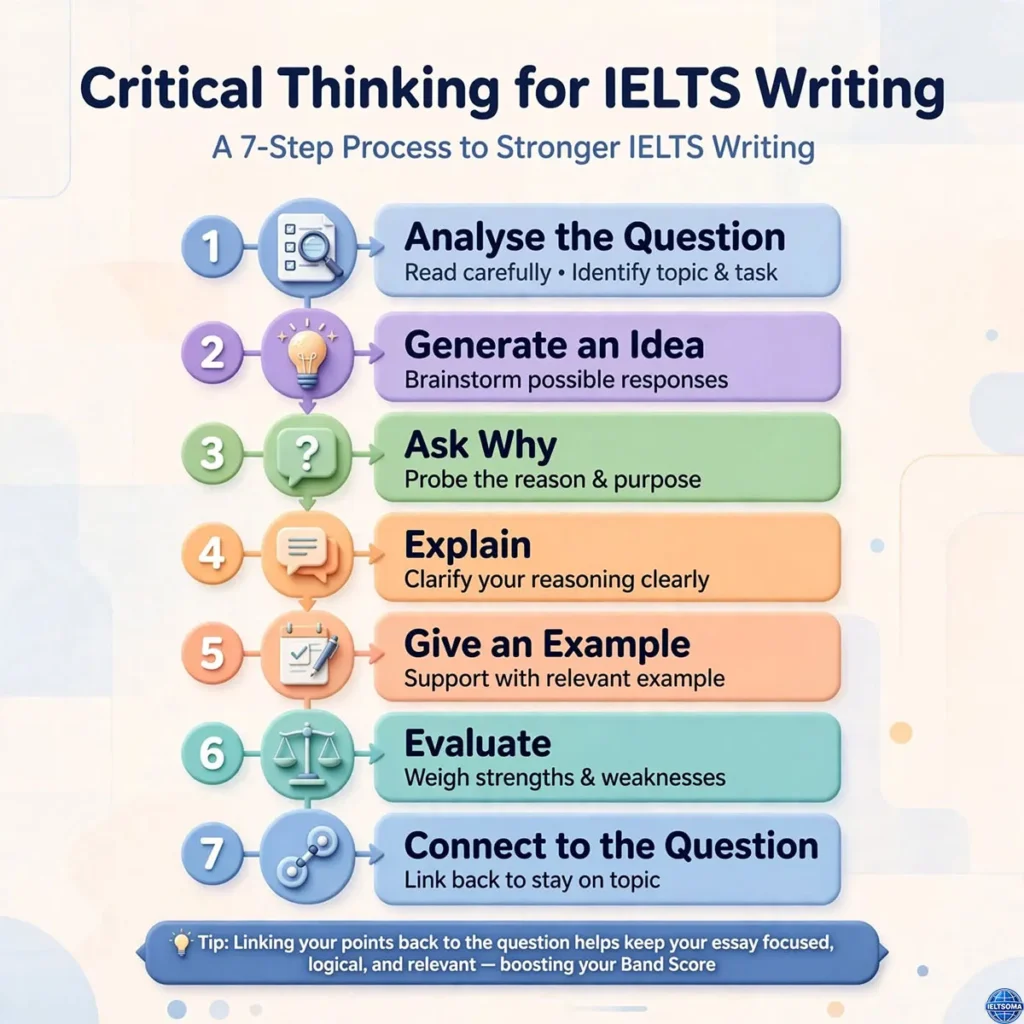
1. Analyse the Question Before Developing Ideas
One of the most important aspects of critical thinking for IELTS Writing is learning to distinguish the topic from the actual question.
Consider:
Many people believe that university education should be free for everyone. To what extent do you agree or disagree?
The general topic is university education.
But the actual issue is whether university education should be free for everyone.
Those are not the same thing.
A candidate who writes about the general benefits of higher education may produce grammatically accurate paragraphs that do not directly answer the question.
Official IELTS guidance specifically advises candidates to read Task 2 prompts carefully, identify all parts of the question and answer them directly rather than relying on memorised essays.
Use the Question Breakdown Method
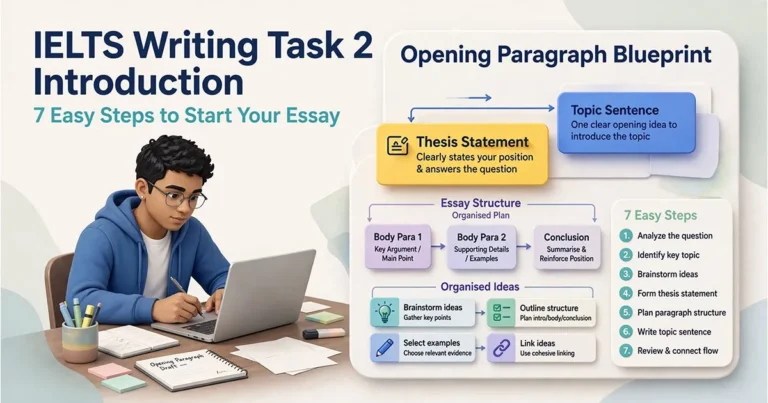
Before writing, identify:
Topic: What is the general subject?
Issue: What specific problem, claim or debate is presented?
Instruction: What exactly must you do?
Position: Do you need to give your opinion?
Scope: Are there multiple groups, causes, effects or issues to address?
For example:
Some people think employers should focus on the skills of job applicants rather than their academic qualifications. To what extent do you agree or disagree?
Break it down:
- Topic: employment
- Issue: skills versus academic qualifications
- Instruction: agree or disagree
- Key comparison: practical skills and qualifications
This prevents you from drifting into a general discussion about employment.
2. Ask “Why?” and “What Happens Next?”
A common IELTS problem is writing an idea and immediately moving to another idea.
For example:
Governments should encourage cycling. Cycling is good for people’s health.
The second sentence gives a reason, but the development stops too early.
Use the Why → How → Result technique.
Step 1: Why?
Why is cycling good for health?
Cycling provides regular physical exercise.
Step 2: How?
How does that affect people?
Regular physical activity can help people maintain a healthier lifestyle and reduce the risks associated with inactivity.
Step 3: Result?
What broader consequence could follow?
As a result, encouraging cycling may contribute to better public health and potentially reduce pressure on healthcare services.
Now the idea has depth.
Main idea → Why → How → Result
This is one of the easiest ways to develop stronger paragraphs without inventing complicated arguments.
3. Examine Both Sides of an Argument
Critical thinking does not mean that you must disagree with everything.
It means that you recognise that many issues have more than one reasonable perspective.
Suppose the question asks whether children should be given homework every day.
A simple argument might be:
Homework helps children learn.
A stronger argument considers both the benefit and the limitation:
Regular homework can reinforce concepts taught in class and encourage children to develop independent study habits. However, excessive homework may reduce the time available for sleep, physical activity and family interaction.
This demonstrates evaluation.
You can then decide which side you consider stronger.
Try the “Benefit + Limitation” Technique
For each major argument, ask:
- What is the benefit?
- What is the potential drawback?
- Under what circumstances does the argument work?
- Is there an exception?
This is particularly useful for:
- advantages/disadvantages questions
- discussion essays
- opinion essays
- problems and solutions
- questions involving competing priorities
You do not need to give equal space to every viewpoint. Your goal is to demonstrate that you have considered the issue intelligently.
4. Challenge Absolute Statements
IELTS questions sometimes contain broad claims.
Critical thinking helps you identify whether a statement is genuinely universal or whether there are exceptions.
Consider:
Technology has made people’s lives easier.
A weak response might accept this completely.
A more thoughtful approach asks:
For whom?
Technology may make life easier for people who have access to reliable digital services. However, people with limited digital skills or poor internet access may not experience the same benefits.
This allows you to produce a more nuanced argument:
Although digital technology has simplified many everyday tasks, its benefits are not equally distributed. People who lack reliable internet access or sufficient digital skills may struggle to take advantage of online services.
Words such as although, however, while, in some cases, to some extent, and for certain groups can help you express these distinctions naturally.
The goal is not to add these expressions simply to sound advanced. Use them when the logic genuinely requires qualification.
5. Evaluate Your Examples Instead of Inventing Statistics
Examples can make an IELTS argument much clearer, but an example should do more than decorate a paragraph.
Consider:
Public transport is beneficial. For example, London has buses and trains.
This does not clearly prove the argument.
A better example explains the connection:
For example, when a city provides frequent and reliable public transport, commuters may be less dependent on private cars. This can help reduce congestion during peak periods.
Notice that the example does not require a made-up statistic.
Official IELTS guidance notes that candidates can support their views with relevant examples from their own knowledge or experience.
Use the Example Test
After writing an example, ask:
How does this example prove my point?
If you cannot answer that question, the example probably needs more explanation.
Avoid invented statistics such as:
Studies show that 87% of people prefer public transport.
Unless you genuinely know the source and the figure is relevant, this adds little value.
A realistic hypothetical example can often be clearer:
For instance, an employee who can commute by a frequent train service may choose not to drive to work, particularly when parking is expensive.
The example supports the argument without pretending to be scientific evidence.
6. Compare Short-Term and Long-Term Consequences
One of the most effective ways to develop deeper IELTS ideas is to consider time.
Ask:
- What happens immediately?
- What happens later?
- Could the short-term benefit create a long-term problem?
- Could an initial cost produce a later benefit?
For example:
Governments should subsidise electric vehicles.
Instead of stopping at:
Electric vehicles produce fewer emissions.
Think further.
Short term:
- Government spending may increase.
- More people may be encouraged to buy electric vehicles.
Long term:
- Demand for charging infrastructure may increase.
- Dependence on petrol may decrease.
- Environmental benefits could become more significant if electricity production becomes cleaner.
You can turn this reasoning into a stronger paragraph:
Government subsidies for electric vehicles may involve considerable short-term expenditure, but they could produce longer-term environmental benefits by encouraging consumers to move away from petrol-powered cars. As adoption increases, governments and businesses may also have greater incentives to expand charging infrastructure.
This type of reasoning is especially useful for essays about:
- government policy
- education
- technology
- the environment
- health
- transport
- employment
- social change
7. Connect Every Idea to the Question
Perhaps the most important critical-thinking habit is the relevance check.
An idea can be interesting, logical and grammatically correct but still be weak if it does not answer the question.
Suppose the question asks:
Should governments make public transport free?
You write:
Public transport is environmentally friendly. Many people enjoy travelling by train because they can read books during their journey.
The second point may be true, but it does not strongly address whether public transport should be free.
Instead, connect the idea directly to cost:
Making public transport free could encourage people to leave their cars at home because the financial incentive to use buses and trains would be stronger. This could increase public transport use and potentially reduce congestion.
Before keeping any paragraph, ask:
Does this sentence help answer the question?
If the answer is no, remove it or rewrite it.
Official IELTS guidance emphasises that candidates must answer the question they are given and avoid responses that merely discuss the broader topic.
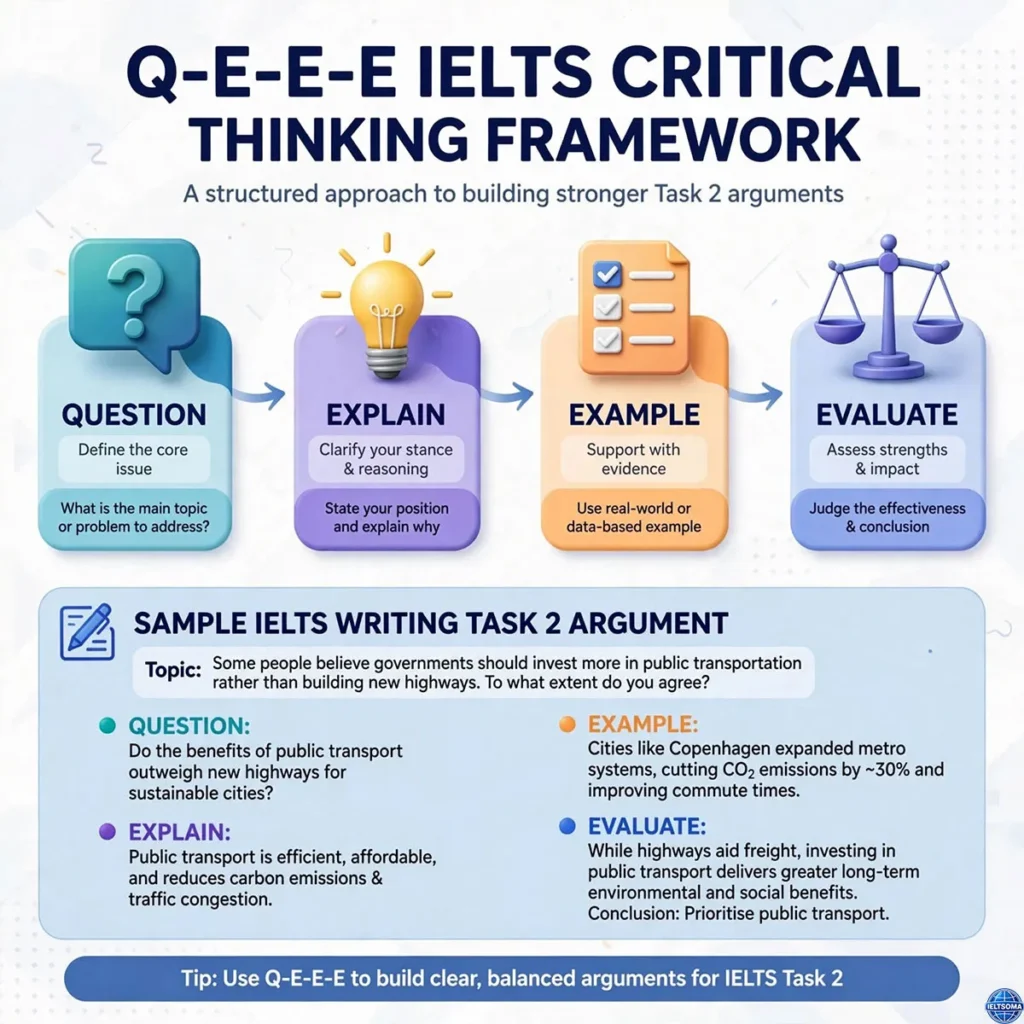
A Simple Critical Thinking Framework for IELTS
You can turn these strategies into a practical exam technique.
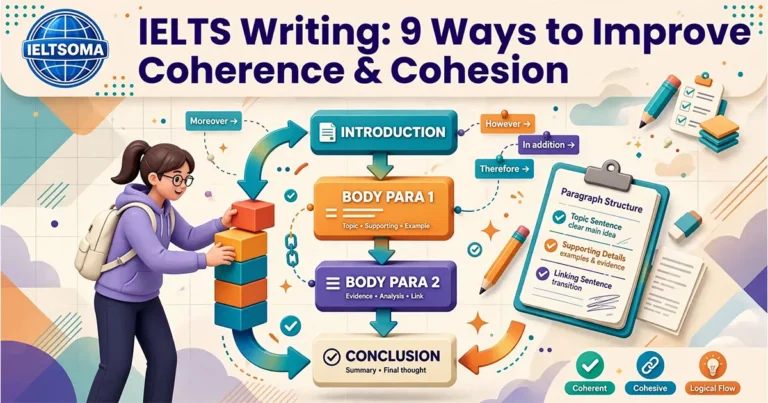
When you receive a Task 2 question, use Q-E-E-E:
Q — Question
What exactly am I being asked?
E — Explain
Why is my main idea true?
E — Example
What realistic example demonstrates it?
E — Evaluate
What limitation, consequence or alternative perspective should I consider?
For example:
Question: Should governments spend more money on public transport?
Idea: Public transport can reduce congestion.
Explain: More people may use buses and trains instead of private cars.
Example: Reliable urban rail services can encourage commuters to leave their cars at home.
Evaluate: However, this works best when services are affordable, frequent and convenient.
You now have enough material for a well-developed body paragraph.
Critical Thinking for IELTS Writing Task 1
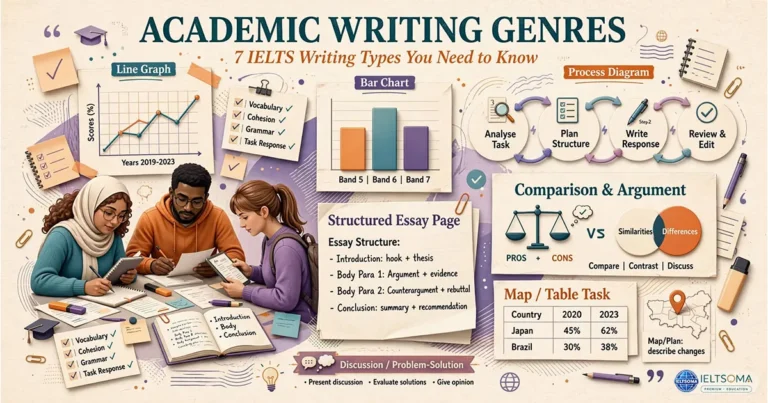
Critical thinking is most obvious in Task 2, but it can also help with Academic Writing Task 1.
You are not expected to give opinions about the data.
Instead, you need to select, compare and organise information intelligently.
For example, if a graph contains six categories, you should not automatically describe every figure in chronological order.
Ask:
- What is the biggest change?
- What is the smallest change?
- Which categories behave similarly?
- Are there contrasting trends?
- What remains relatively stable?
- Which figures are unusually high or low?
This helps you identify the main features.
Official IELTS guidance states that Academic Task 1 requires candidates to summarise information by selecting and reporting the main features and making comparisons where relevant.
So critical thinking in Task 1 means selecting the information that matters most, rather than trying to mention every number.
A 10-Minute Critical Thinking Practice Routine
You do not need to write a complete essay every day to develop this skill.
Try this exercise.
Minute 1–2: Choose a question
Take an IELTS Writing Task 2 question.
Minute 3: Identify the task
Write down:
- topic
- issue
- question type
- your position
Minute 4–5: Generate two main ideas
Do not worry about vocabulary yet.
Minute 6: Ask “Why?”
Give two reasons for each idea.
Minute 7: Ask “What happens next?”
Identify a consequence.
Minute 8: Consider the opposite view
What would someone who disagrees say?
Minute 9: Create an example
Make it realistic and relevant.
Minute 10: Perform a relevance check
Ask:
Does this reasoning directly answer the question?
This short routine trains the thinking process you need before writing.
Common Critical Thinking Mistakes in IELTS Writing
Mistake 1: Confusing complicated ideas with good ideas
A complicated argument is not automatically a strong argument.
Clear reasoning is more valuable than intellectual complexity.
Mistake 2: Giving opinions without explanations
I believe governments should invest in parks.
Why?
If you cannot explain why, the idea is incomplete.
Mistake 3: Listing ideas
Some candidates write four or five points in one paragraph.
It is usually better to develop fewer relevant ideas properly.
Mistake 4: Using examples that do not prove anything
An example should clarify or support the argument.
Mistake 5: Making extreme claims
Words such as always, never, everyone and nobody require strong justification.
Mistake 6: Writing a memorised argument
A memorised paragraph may not fit the exact question.
IELTS itself advises candidates to respond to the actual prompt rather than trying to match it to a pre-learned essay.
How to Build Better Ideas Without Memorising Essays
Instead of memorising complete essays, create idea chains.
For the topic of online education:
Online education
→ flexible schedules
→ easier access for working adults
→ more opportunities for professional development
→ potentially improved employability
Another chain:
Online education
→ less face-to-face interaction
→ fewer opportunities for spontaneous discussion
→ possible reduction in social interaction
→ particularly challenging for some learners
These chains give you adaptable reasoning that can be used for different questions.
This is much more useful than memorising a paragraph beginning with:
“In this modern era, online education has become…”
Your goal is to memorise thinking patterns, not finished essays.
Critical Thinking Checklist Before You Submit
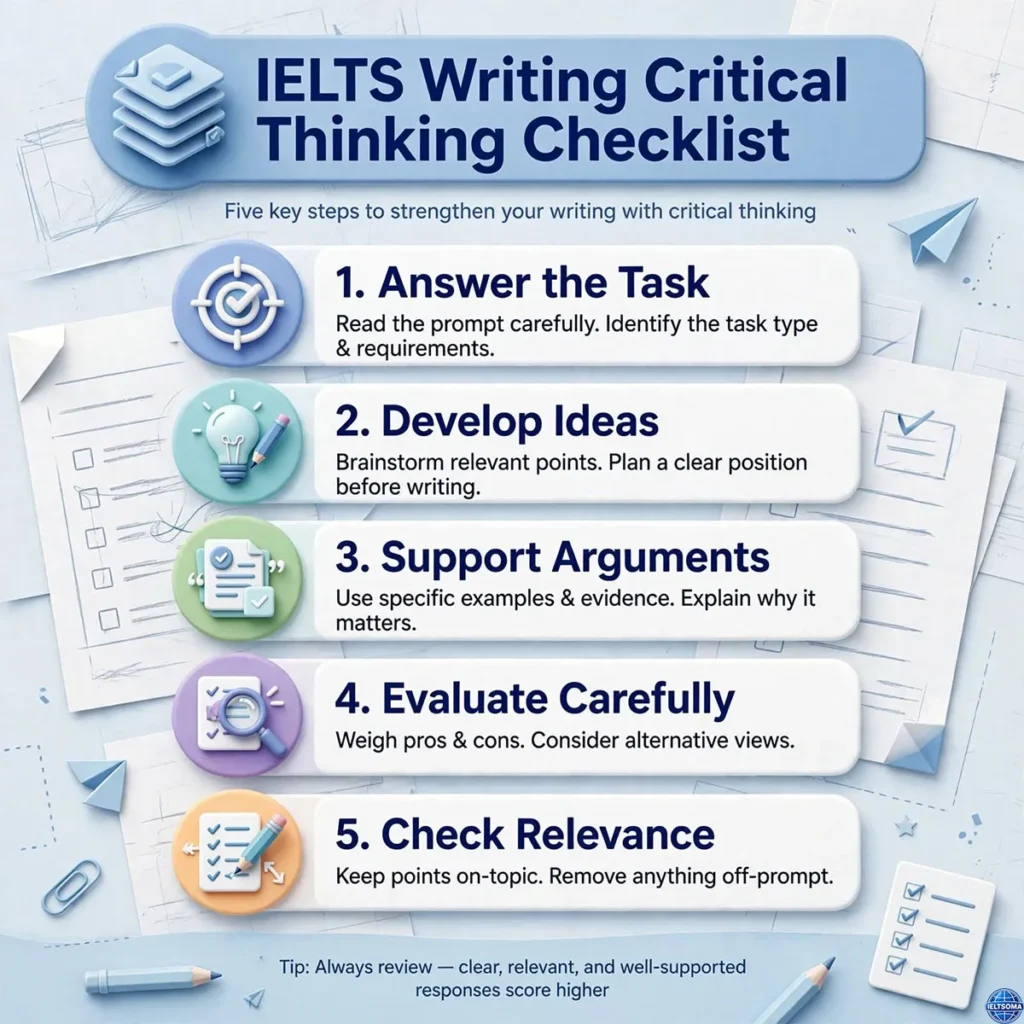
Spend your final minutes checking your essay with these questions:
Task
- Did I answer every part of the question?
- Is my position clear?
- Did I stay focused on the exact issue?
Ideas
- Does every body paragraph have a clear main idea?
- Did I explain my reasons?
- Did I develop my ideas rather than simply list them?
Evidence
- Are my examples relevant?
- Do they actually support my argument?
- Have I avoided unnecessary or invented statistics?
Evaluation
- Did I recognise important limitations or contrasting perspectives where appropriate?
- Have I avoided unsupported absolute claims?
Organisation
- Does each paragraph have a clear purpose?
- Does each idea lead logically to the next?
Language
- Is my vocabulary precise?
- Are my grammatical structures accurate?
- Have I used complex language only where I can control it?
Remember that critical thinking does not replace language ability. Your reasoning must still be expressed clearly and accurately.
Final Takeaway
Critical thinking for IELTS Writing is about making your ideas work harder.
You do not need extraordinary opinions to write a strong essay.
You need to take an ordinary idea and develop it logically:
Point → Reason → Explanation → Example → Consequence → Evaluation
When you learn to think this way, several problems become easier at the same time. You can generate ideas faster, develop paragraphs more effectively, respond more directly to difficult questions and avoid irrelevant information.
Most importantly, you become less dependent on memorised essays.
Before your next IELTS Writing Task 2 practice, do not immediately start writing.
Spend a few minutes asking:
What exactly is the question asking?
Why is my position reasonable?
What happens because of this?
What is the strongest alternative view?
What example would demonstrate my point?
Does every idea directly answer the question?
That is the foundation of critical thinking for IELTS Writing — and it can turn a collection of opinions into a clear, developed and convincing IELTS response.
Further Useful Links: