Whether you’re planning to study at an international university, migrate to another country, or pursue career opportunities overseas, the IELTS exam is often one of the first milestones you’ll need to achieve. A good IELTS score may improve your opportunities for university admission, employment, immigration, and professional registration, depending on the requirements of the organization.
This guide to IELTS success explains what the IELTS exam is, the different test types, its format, and practical preparation strategies that can help you perform at your best. By understanding how the exam works and following a structured study plan, you’ll be better prepared to reach your target band score.
Quick Answer:
IELTS (International English Language Testing System) is an internationally recognized English language proficiency test used for university admission, employment, professional registration, and immigration. It evaluates your Listening, Reading, Writing, and Speaking skills.
Table of Contents
What Is IELTS?

The International English Language Testing System (IELTS) is one of the world’s most widely recognized English language proficiency examinations. It evaluates your ability to communicate effectively in English across four essential language skills:
- Reading
- Writing
- Listening
- Speaking
IELTS is accepted by thousands of organizations worldwide, including universities, employers, licensing bodies, and immigration authorities.
The test is jointly managed by:
Its purpose is to assess how well you can use English in real-life academic, professional, and everyday situations.
Why IELTS Matters
A strong IELTS score may improve your opportunities for:
- University admission
- Immigration applications
- Employment opportunities
- Professional registration
- Demonstrating internationally recognized English proficiency
Many institutions use IELTS scores as part of their admission or recruitment process, making proper preparation an important investment in your future.
Types of IELTS Tests
Choosing the correct IELTS test depends on your personal goals.
IELTS Academic
IELTS Academic is intended for people who plan to:
- Study at colleges or universities
- Apply for postgraduate programs
- Register with professional organizations
- Meet academic English requirements
The Reading and Writing sections focus on academic content commonly encountered in higher education.
IELTS General Training
IELTS General Training is designed for candidates who intend to:
- Migrate to another country
- Work in an English-speaking environment
- Apply for vocational training
- Meet general immigration requirements
The language used is more practical and reflects everyday workplace and social situations.
IELTS Academic vs IELTS General Training
| Feature | IELTS Academic | IELTS General Training |
|---|---|---|
| Best for | University admission | Migration and work |
| Reading | Academic texts | Everyday texts |
| Writing | Reports and essays | Letters and essays |
| Listening | Same for both tests | Same for both tests |
| Speaking | Same for both tests | Same for both tests |

IELTS Test Format
The IELTS exam consists of four sections that assess different language skills.
Listening
Duration: Approximately 30 minutes
You’ll listen to four recordings and answer questions based on what you hear. The recordings include conversations and monologues in a variety of accents.
Tips
- Read the questions before the recording begins.
- Listen carefully for keywords and paraphrased information.
- Check your spelling carefully.
Reading
Duration: 60 minutes
The Reading section measures your ability to understand written English.
Depending on your test type, you’ll encounter either academic texts or general reading materials.
Tips
- Skim passages before reading in detail.
- Identify keywords quickly.
- Manage your time carefully.
Writing
Duration: 60 minutes
The Writing section includes two tasks.
Academic candidates complete:
- Task 1: Describe visual information.
- Task 2: Write an essay.
General Training candidates complete:
- Task 1: Write a letter.
- Task 2: Write an essay.
Tips
- Spend more time on Task 2, as it carries greater weight.
- Organize your ideas logically.
- Use a natural range of vocabulary and grammar.
Speaking
Duration: 11–14 minutes
The Speaking test is a face-to-face interview with a certified examiner and consists of three parts:
- Introduction and interview
- Individual long turn
- Discussion
Tips
- Speak naturally rather than memorizing answers.
- Expand your responses with examples.
- Stay confident even if you make small mistakes.
How to Prepare for IELTS Successfully

A structured study plan can make a significant difference in your final band score.
1. Understand the Test Format
Before beginning your preparation, become familiar with every section of the exam. Knowing what to expect helps reduce anxiety and improves time management.
2. Practice with Authentic IELTS Materials
Use official sample tests and realistic practice questions to understand the types of tasks you’ll encounter on exam day.
3. Improve Your English Every Day
Develop all four language skills by:
- Reading English books, newspapers, and articles
- Listening to English podcasts and news
- Watching English videos
- Writing regularly
- Speaking English whenever possible
4. Expand Your Vocabulary
Rather than memorizing long word lists, learn vocabulary in context and practice using new words naturally.
5. Strengthen Your Grammar
Accurate grammar improves both your Writing and Speaking scores.
Focus on:
- Verb tenses
- Sentence structure
- Subject-verb agreement
- Articles
- Prepositions
6. Take Full-Length Practice Tests
Simulate actual exam conditions by completing timed practice tests. This helps improve endurance, confidence, and time management.
7. Review Your Mistakes
Every incorrect answer is an opportunity to improve. Analyze why you made mistakes and focus on weak areas during your next study session.
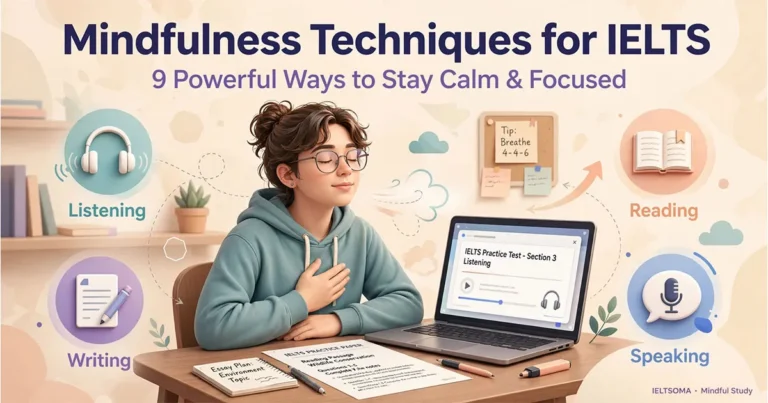
8. Stay Calm on Test Day
On exam day:
- Arrive early.
- Bring the required identification.
- Read all instructions carefully.
- Manage your time wisely.
- Stay relaxed and focused.
Good preparation is the best way to build confidence before the exam.
Common Mistakes to Avoid
Many candidates lose valuable marks because of avoidable mistakes.
Try to avoid:
- Ignoring time limits
- Memorizing Speaking answers
- Using advanced vocabulary incorrectly
- Leaving questions unanswered
- Forgetting to proofread your Writing tasks
- Practicing only your strongest skills
A balanced preparation strategy usually leads to a better overall IELTS score.
Frequently Asked Questions
How long should I prepare for IELTS?
Preparation time depends on your current English level and your target band score. Many candidates study consistently for several weeks or months before taking the exam.
Is IELTS difficult?
The IELTS exam is challenging, but it is manageable with consistent practice and a clear understanding of the test format.
Which IELTS test should I choose?
Choose IELTS Academic if you’re applying for higher education or professional registration. Choose IELTS General Training if you’re migrating or applying for work in many English-speaking countries.
Can I improve my IELTS score quickly?
Focused study, regular practice, and reviewing your mistakes can significantly improve your performance, although progress varies from person to person.
What is an effective way to achieve IELTS success?
An effective approach combines understanding the exam format, practicing regularly, improving your English skills, and taking realistic mock tests. Consistency and targeted preparation generally produce better results than last-minute cramming.
Final Thoughts
Achieving a strong IELTS score requires preparation, consistency, and the right study strategy. By understanding the exam structure, practicing each language skill, and learning from your mistakes, you’ll improve your chances of reaching your desired band score.
This guide to IELTS success provides a solid foundation for your preparation. With steady practice, reliable study materials, and a clear plan, you can approach the IELTS exam with confidence and move one step closer to your academic, professional, or immigration goals.
Continue Your IELTS Journey
Ready to improve your IELTS score? Explore our free IELTS lessons, practice tests, and expert guides to strengthen your Reading, Writing, Listening, and Speaking skills. Consistent practice is the key to achieving your target band score.
Further Reading: